01 Mission

Protect service membersbefore harm escalates.

Sense earlier. Orient with evidence. Act with care. Learn and adapt.

MP2 is an independent, volunteer military prevention network. We integrate predictive analytics with leader judgment to guide timely, human-led care and support for units that may need additional attention—before harmful behaviors occur.

Explore the evidence

Field Lab — Coming soon

Independent and nongovernmental. MP2 is not affiliated with the U.S. Department of War or any other part of the U.S. government.
Human-led by design. AI can help surface patterns; people provide context, judgment, and care. Unit-level decision support only—never individual risk scores or automated decisions.

The human-led prevention loopSense changing conditions, orient with evidence and context, act through human care, then learn from results and adapt. 01 SENSE02 ORIENT03 ACT04 LEARN
Sense. Orient. Act. Learn.Four questions. One human-led method.

01 · SenseWhat needs attention?Frame a bounded unit-level command question.

02 · OrientWhat does the evidence suggest?Combine approved data, research, analysis, and local context.

03 · ActWhat will we try?Choose supportive action, a human owner, and a review date.

04 · LearnWhat changed?Decide what to sustain, adapt, or stop—then begin again.

How MP2 supports the prevention loop.

Four commander questions. One repeatable path from attention to evidence, action, and learning.

Select a part of the prevention loop.

Research areas

Explore the papers behind military prevention, unit forecasting, culture, and readiness.

Browse all papers and reports Learn the research methods

Unit forecasting and risk models

Prevention systems and organizational culture

Readiness, recovery and applied analytics

Prevention is a team effort.

MP2 brings together researchers, practitioners, clinicians, data experts, leaders, and people with lived experience around hard prevention problems.

Our job is to connect the field, strengthen the evidence, translate what is useful, and help durable learning systems outlast any one team or tour.

Meet MP2 and see how to collaborate
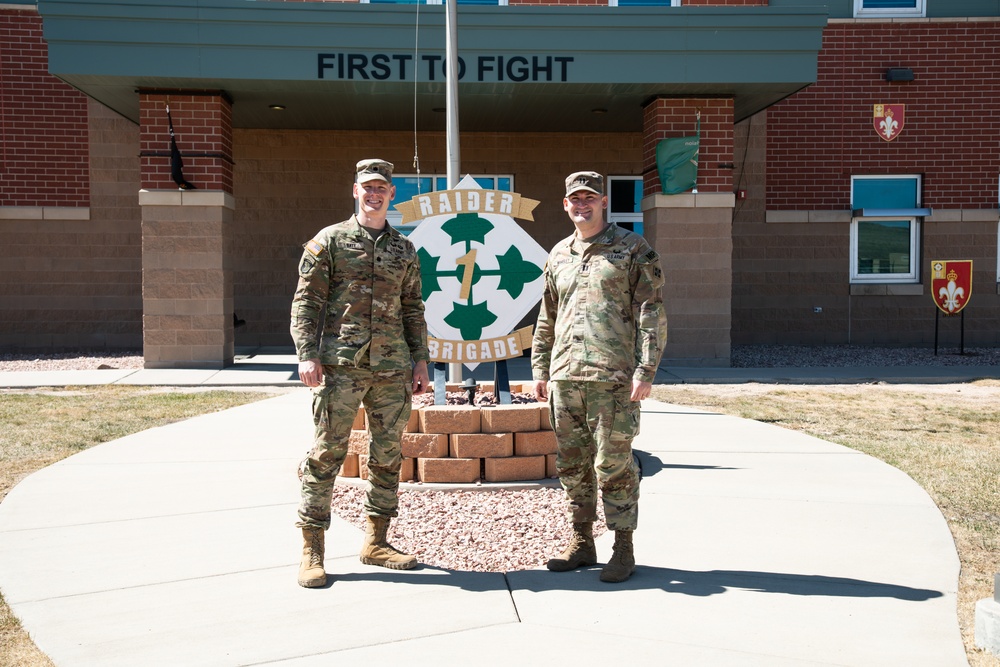
Two RAID-T leaders standing outside the Raider Brigade headquarters at Fort Carson.
RAID-T leaders at Fort Carson. U.S. Army photo by 1st Lt. Taylor Graham via DVIDS.

Historical origin · 4th Infantry Division · DVIDS, April 2024

The Project Prevention Journey

MP2 draws on a historical Army initiative, Project Prevention. RAID-T brought leaders, analysts, developers, and prevention professionals together around a unit-level question: how could leaders focus attention before the next crisis?

Historical note: Project Prevention was the Army initiative described in this story. Mission: Prevent & Protect is an independent, nongovernmental effort.

Source: The Project Prevention Journey: Raider Analytics, Innovation, and Data Team (RAID-T) Efforts to Forecast and Reduce Harmful Behaviors

Bring your experience to the work.

Military prevention needs people who understand the field, ask rigorous questions, and turn evidence into practical action. Help shape what MP2 studies and how its lessons are used.

Leaders and practitioners

Help frame the questions that matter in units. Bring experience with prevention, implementation, and the conditions that shape effective support.

Researchers

Help test assumptions, evaluate approaches, and connect field questions with rigorous research. Make findings and limitations useful to the people making decisions.

Data and methods specialists

Help develop transparent methods, improve measurement, and make analysis easier to interpret. Keep privacy, context, and human judgment central to the work.
Our organizational contact channel is being established. Follow MP2 for updates and future opportunities to take part.

MP2 origin briefingOur story

90-second visual briefing · source grounded

One question became a prevention mission.

See how a field problem became a cross-functional team, a responsible signal, a human response, and the idea MP2 carries forward.

Fort Carson · the field problemCould leaders see changing conditions before the next crisis?
Narrator

At Fort Carson, a commander was confronting a pattern of harmful incidents. The question was urgent and practical: could leaders see changing conditions before the next crisis?

MP2Source grounded01 / 10

ReadyAI-generated narration · human-reviewed script.

Narrator

It began with a question.

At Fort Carson, a commander was confronting a pattern of harmful incidents. The question was urgent and practical: could leaders see changing conditions before the next crisis?

Research guide

The answer was not to predict a person. It was to notice change at the unit level, then put those signals in the hands of leaders and prevention professionals who understood the context.

Narrator

The question created a coalition.

That question brought together the Raider Analytics, Innovation, and Data Team, known as RAID-T: leaders, analysts, software developers, and prevention professionals working across boundaries around one field problem.

Research guide

Four jobs became one learning system: steward the data, improve the model, design the leader-facing tool, and evaluate the whole prevention system.

Narrator

They found an organizational signal.

The public base model combined recent recorded incidents with logistic regression to estimate whether a company-sized unit would record another serious incident.

Research guide

The estimate was a prompt to look closer, not a diagnosis, an individual score, or an automatic decision. Human judgment remained in the lead.

Narrator

A signal mattered when people could act.

When a signal appeared, leaders examined local conditions and worked with prevention professionals to bring tailored support to the formation.

Research guide

The pilot evaluation suggested fewer reported incidents, but the intervention combined alerts, leader emphasis, and focused care. The evidence still needs qualification and replication.

Narrator

MP2 carries the learning forward.

MP2 carries that learning forward, from one Army formation into a joint community of researchers, practitioners, clinicians, data experts, and military leaders.

Research guide

The mission is simple: generate better signals, interpret them responsibly, act through evidence-based human care, and learn before harm escalates.

Back to top